


You are driving through an intersection.
Your light is green. Traffic is moving normally. Everything feels routine.
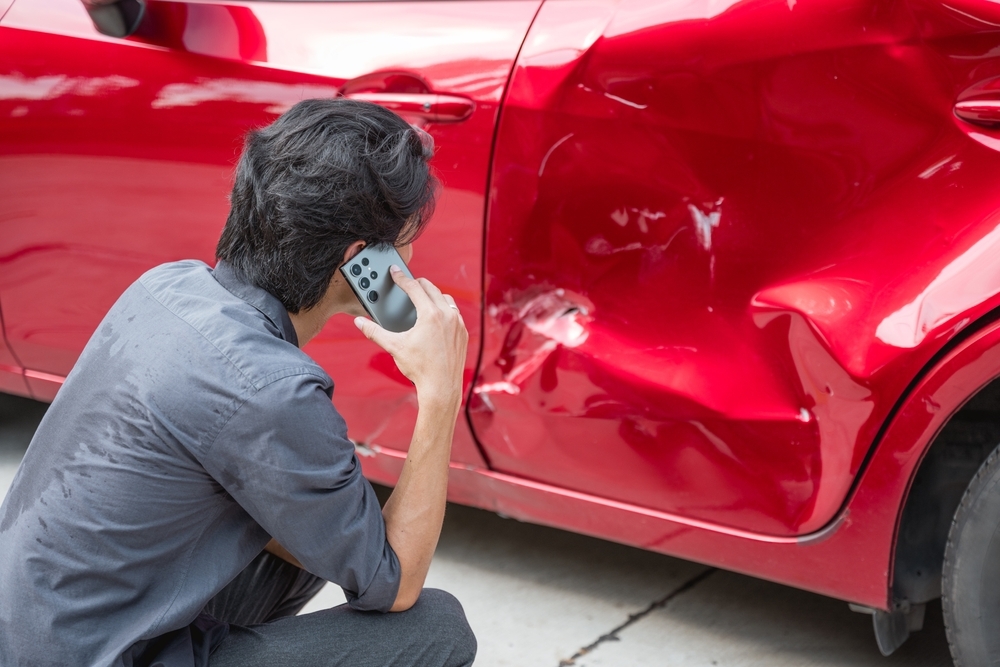
Then suddenly a vehicle comes from the side and slams directly into your door.
The impact is violent and unexpected. Your car spins. Glass shatters. Your body jolts sideways.
These are called T-bone accidents, and they are some of the most dangerous crashes on Texas roads.
Side-impact collisions happen fast and often leave drivers confused about what just happened. One of the first questions people ask afterward is simple:
Who was actually at fault?
In Texas, determining fault in a T-bone accident often comes down to what happened in the seconds leading up to the crash. Understanding how liability is evaluated can help drivers know what to expect if they are involved in one of these serious collisions. If you were injured in this type of motor vehicle accident, call Lobo Ley at 713-481-0072for a free consultation.
Texas T-Bone Accidents: What Exactly Is A Side-Impact Crash?
A T-bone accident occurs when the front of one vehicle crashes into the side of another vehicle, forming a shape similar to the letter T.
These collisions most often happen at intersections when two vehicles enter the same space at the same time.
Common locations where T-bone accidents occur include:
- Traffic light intersections
- Four-way stops
- Highway entrance ramps
- Parking lot exits
- Uncontrolled intersections
Because the sides of passenger vehicles offer less structural protection than the front or rear, these crashes often lead to significant injuries.
Even modern vehicles equipped with side airbags cannot always absorb the full force of a side-impact collision.
Determining Fault In A Texas T-Bone Accident: Which Driver Had The Right Of Way?
In most T-bone accident cases, fault depends on right-of-way rules.
The driver who legally had the right of way is typically not considered responsible for the crash. The driver who failed to yield, ran a red light, or ignored a stop sign may be considered at fault.
Some common causes of T-bone accidents include:
- Running a red light
- Failing to stop at a stop sign
- Making an unsafe left turn
- Distracted driving
- Speeding through an intersection
For example, if a driver runs a red light and strikes another vehicle crossing the intersection legally, the driver who ignored the traffic signal is usually considered responsible for the collision.
However, not every case is that straightforward.
Texas Intersection Accidents: Why Determining Fault Is Sometimes Complicated
Even when a crash seems obvious, determining fault can become complicated.
Several factors may influence the investigation, including:
- Conflicting driver statements
- Lack of clear witnesses
- Limited camera footage
- Disputes about traffic signal timing
In some situations, both drivers may claim they had a green light or that the other vehicle entered the intersection first.
Investigators often rely on multiple sources of evidence to reconstruct what happened.
Important evidence may include:
- Police accident reports
- Traffic camera footage
- Surveillance video from nearby businesses
- Vehicle damage patterns
- Eyewitness testimony
Accident reconstruction specialists may also analyze vehicle movement and impact points to determine how the collision occurred.
Similar Post: Understanding Your Rights After A Serious Motor Vehicle Accident In Texas
Texas Comparative Fault Rules: Can More Than One Driver Be Responsible?
Texas follows a legal principle called modified comparative fault.
This means that more than one driver can share responsibility for an accident.
For example, one driver may have entered the intersection improperly while the other driver may have been speeding or distracted.
If both drivers contributed to the crash, investigators may assign a percentage of fault to each person involved.
Under Texas law:
- A driver may recover damages if they are 50 percent or less responsible for the accident
- Compensation may be reduced based on their percentage of fault
For instance, if someone is found 20 percent responsible for a crash, their compensation may be reduced by that same percentage.
Because fault allocation affects potential recovery, determining what truly happened in the moments before a crash becomes extremely important.
Injuries In Texas T-Bone Accidents: Why Side-Impact Crashes Can Be Severe
Side-impact collisions often cause serious injuries because the point of impact is closer to the occupants of the vehicle.
Unlike front-end collisions, there is less space between the door and the passenger inside the car.
Common injuries in T-bone accidents include:
- Head injuries and concussions
- Traumatic brain injuries
- Broken ribs or bones
- Neck and spinal injuries
- Internal injuries
These injuries can require significant medical treatment and recovery time, especially when the impact occurs at higher speeds.
Because intersection crashes can involve sudden and forceful impacts, medical evaluation is often important even if symptoms appear later.
Evidence In Texas T-Bone Accident Claims: Why Early Investigation Matters
After a T-bone accident, gathering evidence quickly can make a significant difference.
Over time, important details can disappear. Witnesses may become difficult to locate. Camera footage may be erased or overwritten.
Early investigation may involve:
- Reviewing police reports
- Collecting witness statements
- Examining vehicle damage
- Obtaining traffic camera footage
- Evaluating accident reconstruction evidence
The goal is to clearly establish how the crash occurred and which driver failed to follow traffic laws.
When evidence is preserved early, it becomes easier to determine liability and address disputes with insurance companies.
Injured In A Texas T-Bone Accident? Lobo Ley Can Help
T-bone accidents can happen in seconds, but the consequences can last much longer.
Medical bills, vehicle damage, and time away from work can quickly create stress and uncertainty for injured drivers and their families.
The attorneys at Lobo Ley represent individuals injured in car accidents throughout Texas, including cases involving serious intersection crashes. By investigating the circumstances surrounding an accident and identifying responsible parties, the firm works to help injured clients in Houston, Dallas, and the surrounding areas pursue compensation for their losses.
If you were injured in a Texas T-bone accident and have questions about who may be responsible, speaking with an experienced personal injury attorney can help you better understand your options.
Contact Lobo Ley at 713-481-0072 to discuss your situation and learn how the firm may be able to help you move forward.
Disclaimer: This blog is intended for informational purposes only and does not establish an attorney-client relationship. It should not be considered as legal advice. For personalized legal assistance, please consult our team directly.